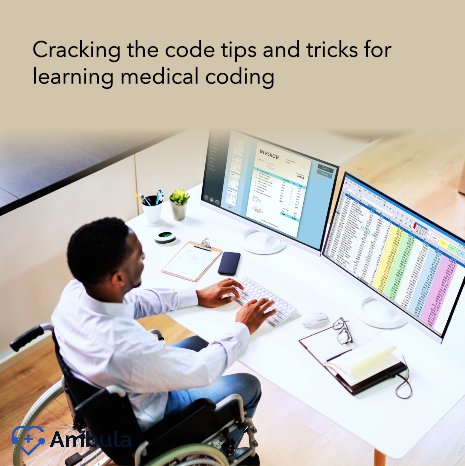
The healthcare industry is a complex and rapidly evolving field that relies on many professionals to provide quality care to patients. One critical aspect of healthcare that is often overlooked is medical coding. Despite being relatively unknown, medical coding is crucial in ensuring accurate documentation and billing of medical services.In this blog post, we will explore the world of medical coding, including its definition, importance in healthcare, and history. We will also delve into the role of medical coders, standard coding systems, potential errors to avoid, and ethical and legal considerations related to medical coding. Finally, we will discuss future trends and advancements in medical coding technology and their potential impact on the field.Whether you are a healthcare professional, medical coder, or simply interested in learning more about this critical aspect of the healthcare industry, this blog post will provide valuable insights and information to help you understand the importance of accurate and ethical medical coding.Table of content
- What is medical coding, and Why is it Important?
- The Role of Medical Coders in Healthcare
- Medical Coding Systems
- Common Medical Coding Errors to Avoid
- Medical Coding and Insurance Claims
- Medical Coding and Electronic Health Records (EHRs)
- Career Opportunities in Medical Coding
- Ethical and Legal Issues in Medical Coding
- Future Trends in Medical Coding
What is medical coding, and Why is it Important?
Medical coding is the process of translating medical diagnoses, procedures, and services into standardized codes. These codes are used for various purposes, such as billing, insurance claims, and statistical analysis. In other words, medical coding is a common language that allows healthcare providers, insurance companies, and government agencies to communicate and exchange information accurately and efficiently.The importance of medical coding in healthcare cannot be overstated. Accurate medical coding ensures that healthcare providers are reimbursed appropriately for their services and that patients receive the proper medical care. Moreover, medical coding plays a critical role in healthcare research and analysis, allowing researchers to identify trends, track disease outbreaks, and measure the effectiveness of medical treatments.The history of medical coding can be traced back to the early 20th century when hospitals began using standardized codes to record and report medical data. However, it was not until the 1970s that medical coding became a formalized and widely adopted practice in the United States. Today, medical coding is an essential part of the healthcare industry, with its own professional associations, certification programs, and educational requirements. Medical coding will remain vital to healthcare delivery and management as the healthcare industry evolves.
The Role of Medical Coders in Healthcare
The role of medical coders in healthcare is crucial, as they ensure that medical data is accurately recorded and communicated across different healthcare systems.Medical coders are responsible for reviewing medical records, such as physician notes, laboratory results, and imaging reports, to determine the appropriate codes that accurately reflect the diagnoses and procedures performed. They use coding systems, such as ICD-10, CPT, and HCPCS, to translate this information into standardized codes recognized and accepted by insurance companies, government agencies, and other healthcare stakeholders.The importance of accuracy in medical coding cannot be overstated. Medical coding errors can have serious consequences, such as denied insurance claims, improper medical treatment, and even legal liability. Medical coders must ensure that they accurately capture all relevant medical information, as even minor errors can have significant consequences for patients, healthcare providers, and insurance companies.
Medical Coding Systems
Medical coding systems are standardized code sets used to describe medical diagnoses, procedures, and services in healthcare. Several coding systems are used in healthcare, but ICD-10, CPT, and HCPCS are the most widely used ones.ICD-10, or the International Classification of Diseases, Tenth Revision, is a coding system developed by the World Health Organization (WHO) to classify and code diseases and other health conditions. ICD-10 codes are used by healthcare providers, insurance companies, and government agencies for various purposes, such as tracking disease outbreaks, measuring healthcare outcomes, and determining reimbursement for medical services.CPT, or Current Procedural Terminology, is a coding system developed and maintained by the American Medical Association (AMA). CPT codes describe medical procedures and services healthcare providers provide, such as surgeries, diagnostic tests, and office visits. Healthcare providers and insurance companies use CPT codes to determine reimbursement rates for medical services.HCPCS, or Healthcare Common Procedure Coding System, is a coding system developed by the Centers for Medicare and Medicaid Services (CMS) that describes and codes medical procedures and services provided to Medicare and Medicaid patients. Healthcare providers and insurance companies use HCPCS codes to determine reimbursement rates for medical services provided to Medicare and Medicaid patients.
Common Medical Coding Errors to Avoid
Even the most minor errors in medical coding can have significant consequences, such as denied insurance claims, improper medical treatment, and even legal liability. There are several common medical coding errors that healthcare providers and medical coders should be aware of and avoid.
Undercoating
Undercoding is a standard medical coding error that occurs when a medical coder fails to assign the appropriate codes that accurately reflect the level of medical care provided. This can result in lower reimbursement rates for healthcare providers and lead to improper medical treatment for patients.
Overcoming
Overcoming is another standard medical coding error that occurs when a medical coder assigns codes that do not accurately reflect the level of medical care provided. This can result in higher reimbursement rates for healthcare providers and lead to unnecessary medical treatment for patients.
Unbundling
Unbundling is a medical coding error when a medical coder assigns multiple codes for a single procedure or service that a single code should cover. This can result in higher reimbursement rates for healthcare providers and lead to denied insurance claims for patients.Upcoding is a medical coding error that occurs when a medical coder assigns codes that reflect a higher level of medical care than what was provided. This can result in higher reimbursement rates for healthcare providers and lead to legal liability for fraudulent billing practices.
Medical Coding and Insurance Claims
Insurance companies rely on accurate medical coding to determine the appropriate reimbursement rates for medical services provided to their policyholders. Inaccurate medical coding can result in delayed or denied insurance claims, which is frustrating for healthcare providers and patients.Several common insurance claim errors related to medical coding can lead to claim denials or delays. These include undercoding, overcoding, unbundling, and upcoding, which we discussed earlier. Other typical insurance claim errors related to medical coding include incorrect diagnosis or procedure codes, mismatched codes between diagnosis and procedure, and failure to provide sufficient documentation to support medical claims.The importance of accurate medical coding for insurance claims cannot be overstated. Accurate medical coding ensures that healthcare providers are adequately reimbursed for their services, which is essential for maintaining the financial health of healthcare organizations. Accurate medical coding also ensures that patients receive the appropriate medical treatment and care, ultimately leading to better health outcomes.
Medical Coding and Electronic Health Records (EHRs)
Medical coding and electronic health records (EHRs) are closely intertwined. EHRs are digital versions of patients' medical records that contain a wealth of information about their medical history, including diagnoses, treatments, medications, and test results. Medical coding standardizes this information and makes it easily searchable and accessible.Integrating medical coding with EHRs has numerous benefits for healthcare providers and patients. Using standardized medical codes allows healthcare providers to easily search for specific diagnoses and treatments in a patient's EHR, saving time and improving accuracy. Medical coding can also help ensure that EHRs are complete and up-to-date, improving patient care and reducing the risk of medical errors.Furthermore, medical coding in EHRs can streamline insurance claims processing by ensuring that the correct codes describe medical services provided to patients. This can help healthcare providers receive proper service reimbursement and reduce the likelihood of denied insurance claims.However, there are also challenges to integrating medical coding with EHRs. Medical coding is a complex process that requires a high degree of accuracy and attention to detail. Healthcare providers and medical coders must ensure that all medical information is accurately documented in EHRs and that the correct medical codes are assigned to each diagnosis, treatment, and service.
Career Opportunities in Medical Coding
According to the Bureau of Labor Statistics, employment of medical records and health information technicians, including medical coders, is projected to grow 8 percent from 2019 to 2029, much faster than the average for all occupations. This growth is driven by an aging population that requires more medical services and the increasing use of electronic health records.To become a medical coder, one typically needs a high school diploma or equivalent and specialized training in medical coding. This can be obtained through certificate or associate degree programs in medical coding, health information technology, or a related field. Some employers may also require certification from a professional organization, such as the American Academy of Professional Coders (AAPC) or the American Health Information Management Association (AHIMA).Advancement opportunities in medical coding may include supervisory or management roles and opportunities to specialize in certain areas, such as coding for a particular medical specialty or working in medical billing and reimbursement. Continuing education and certification may also be necessary to advance in this field.
Ethical and Legal Issues in Medical Coding
Medical coding errors can have significant legal consequences, as inaccurate or fraudulent coding can result in improper billing, overpayment, and potential liability for healthcare providers. For example, if a healthcare provider intentionally upcodes a medical service to receive higher reimbursement rates from insurance companies, this could be considered fraudulent billing and result in legal action.Coding errors can also result in denials or delays in insurance claims, harming patients and healthcare providers. Insurance companies may refuse to pay for services incorrectly coded or billed, leaving patients with significant medical bills and healthcare providers with lost revenue.To mitigate legal risks related to medical coding errors, healthcare providers must implement effective compliance programs that ensure accurate and ethical medical coding practices. This includes regular audits of medical records and billing practices and ongoing education and training for medical coders and other healthcare staff.
Future Trends in Medical Coding
As technology continues to advance, the field of medical coding is also evolving, with several future trends on the horizon. One major trend is the increasing use of technology to streamline medical coding processes. This includes using electronic health records (EHRs) and computer-assisted coding (CAC) software, which can automatically suggest appropriate codes based on medical documentation. These advancements can help reduce the time and resources needed for medical coding while improving accuracy and consistency.Another potential trend in medical coding is changes to coding systems themselves. For example, the International Classification of Diseases (ICD) coding system is periodically updated to reflect medical practices and technology changes. Future updates may include new codes for emerging medical technologies, such as telemedicine and wearable medical devices.Artificial intelligence (AI) is also expected to impact medical coding in the future significantly. AI algorithms can be trained to recognize patterns in medical data and suggest appropriate codes, potentially reducing humans' need for manual coding. However, AI also raises ethical considerations around privacy and bias, and how extensively AI will be incorporated into medical coding processes remains to be seen.
Conclusion
Medical coding is a critical component of the healthcare industry, providing a standardized system for documenting and billing medical services. Medical coders play a vital role in ensuring that medical records are accurate and consistent, essential for providing quality patient care and maintaining regulatory compliance.We discussed the importance of accurate medical coding, including the impact of coding errors on insurance claims and potential legal liabilities for healthcare providers. We also explored the various coding systems used in medical coding, common coding errors to avoid, and ethical and legal considerations related to medical coding.Looking to the future, advancements in medical coding technology and potential changes to coding systems will continue to shape the field. While these changes bring new opportunities and challenges, the importance of accurate and ethical medical coding remains unchanged.