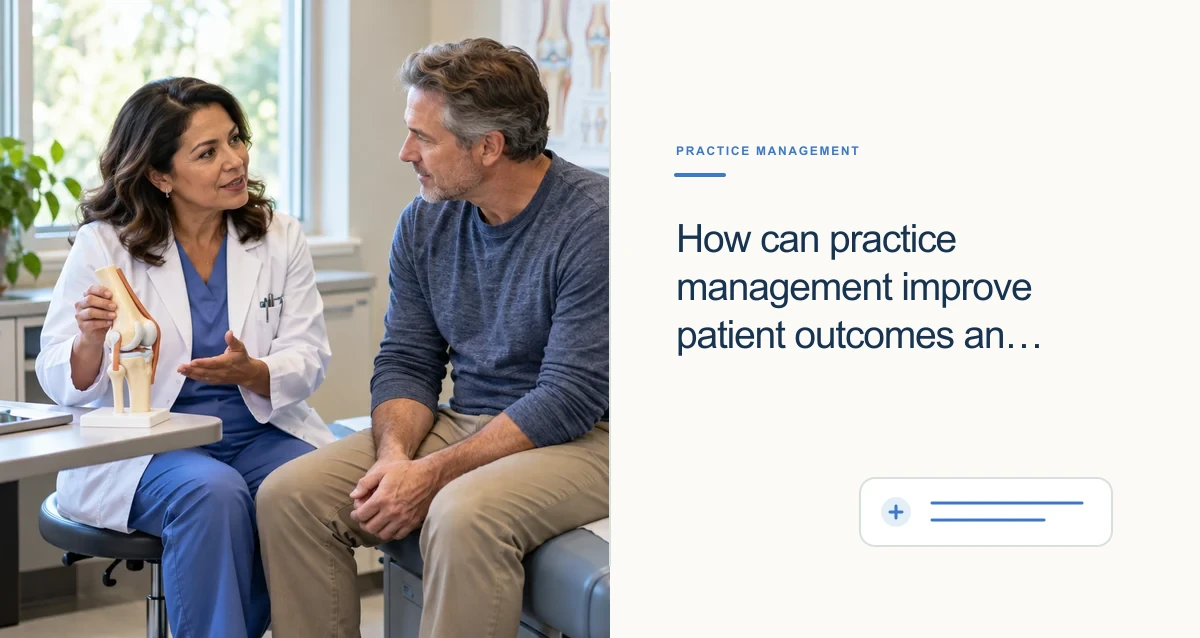
Staff training can support safer, more consistent care when it is connected to the actual work people perform—not treated as a one-time presentation. A useful program identifies a specific practice need, gives each role a chance to learn and practice, and checks whether the new process is being used as intended.
1. Start with a defined care or workflow gap
Begin with evidence: patient feedback, chart audits, incident reviews, referral delays, recurring documentation gaps, or staff observations. State the problem in practical terms. “Improve quality” is too broad; “make sure every abnormal result has a documented owner and follow-up plan” is something a team can learn and measure.
Choose a small number of priorities. Training cannot fix unclear staffing, insufficient time, broken equipment, or an unsafe policy on its own. Address system barriers alongside individual learning needs.
2. Match learning to roles and real scenarios
Clinicians, medical assistants, schedulers, and billers interact with different parts of the care process. Use role-specific examples and explain how each person’s work affects the next handoff. Include common cases as well as exceptions: a patient who needs an interpreter, a missing referral record, an urgent result, or a system outage.
Use demonstrations, short practice sessions, job aids, and supervised rehearsal where appropriate. Let staff ask questions and show the workflow back in their own words. Avoid using real patient information in training unless access and safeguards are appropriate; a test environment or de-identified example is often preferable.
3. Make expectations and escalation paths clear
Staff need to know the approved process, who owns each step, where to record completion, and when to escalate a concern. For a new workflow, provide a concise reference at the point of work and identify a knowledgeable person who can help. Clarify what staff should do when the usual process cannot be followed.
4. Reinforce privacy, safety, and communication
Training should reflect current practice policies and applicable requirements. HHS states that covered entities must train workforce members on privacy procedures, and the HIPAA Security Rule includes workforce security-awareness training requirements. Tailor instruction to job responsibilities: appropriate access, identity verification, handling information in public areas, secure messaging, and how to report a suspected incident.
Clinical communication skills matter too. Practice plain-language explanations, respectful listening, teach-back when suitable, and qualified language assistance. The aim is not a memorized script; it is to make sure the patient understands the next step and has a way to ask questions.