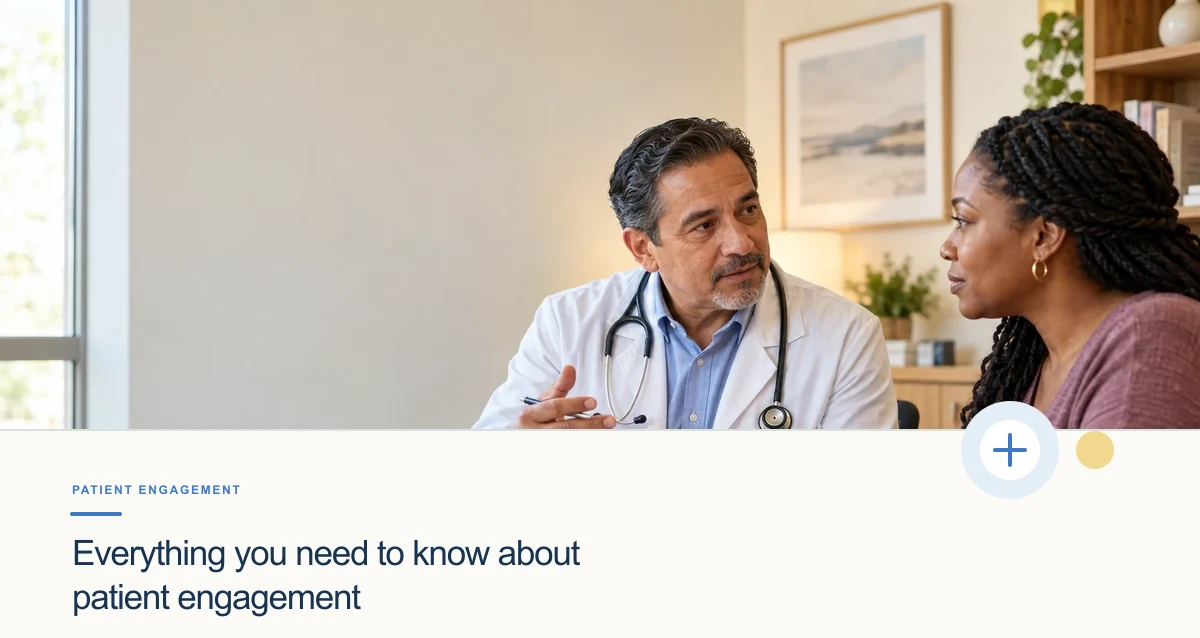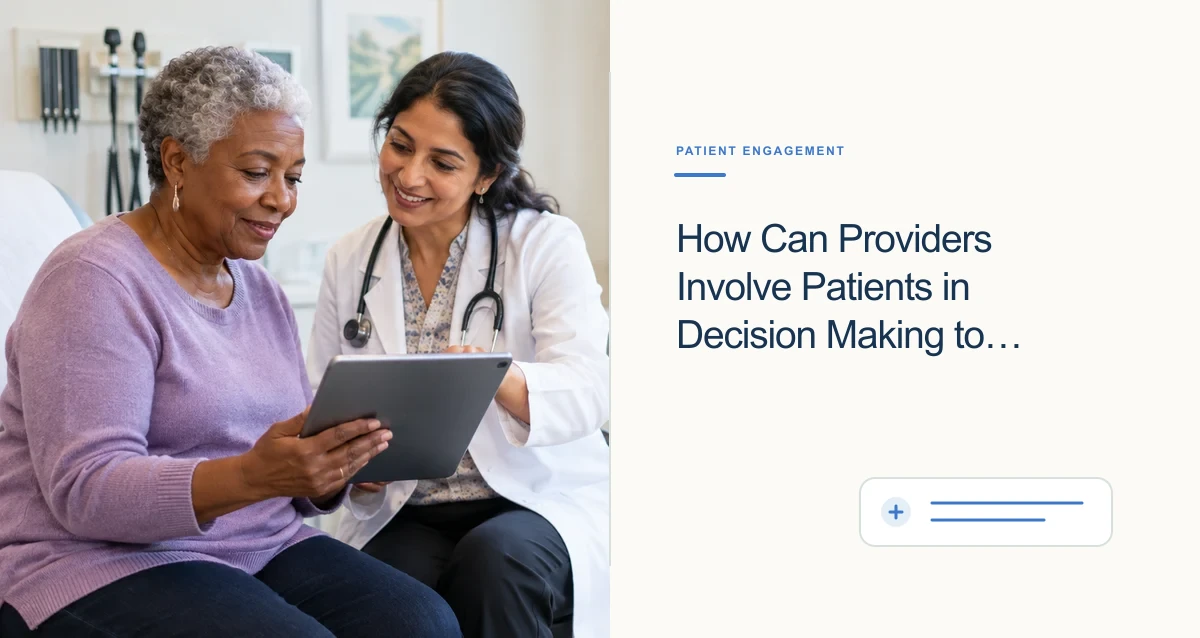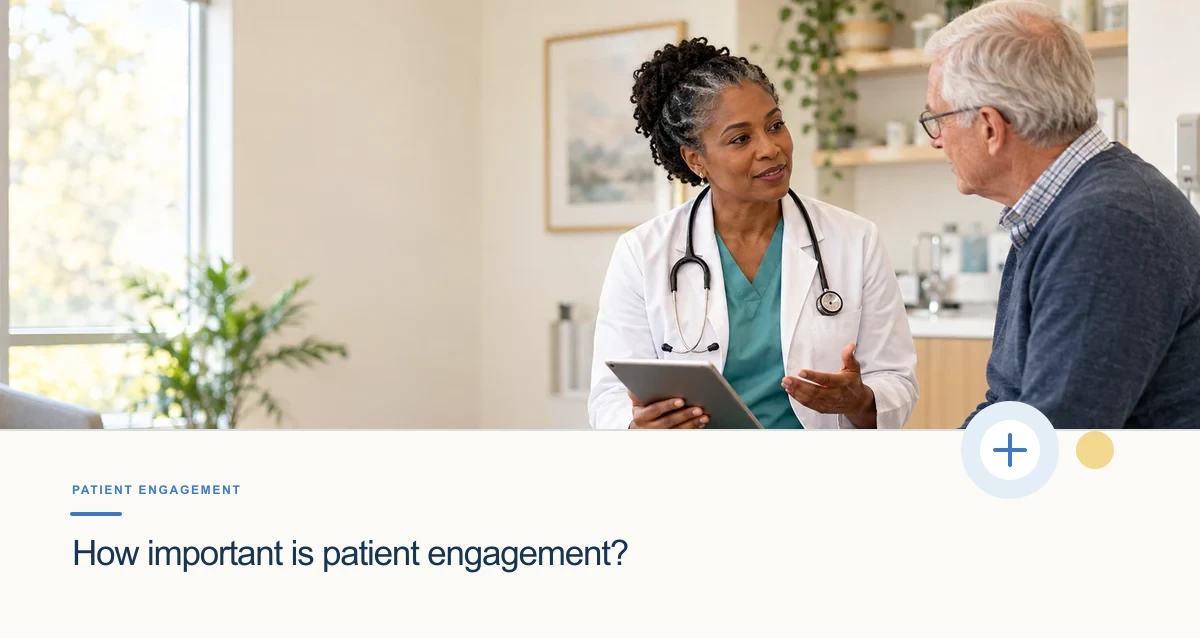
Patient engagement matters because care is more likely to reflect a person’s needs when the patient can understand options, share what matters to them, and take part in decisions. Engagement is not the same as portal use, appointment attendance, or following instructions. It is an ongoing relationship shaped by communication, access, trust, health literacy, culture, disability, and the practical realities of a person’s life.
What meaningful engagement can look like
- Clinicians invite questions and explain choices in plain language.
- Patients can share goals, concerns, preferences, and relevant context.
- Teams use teach-back or other checks to see whether instructions were understood.
- Follow-up plans identify who will do what, and how the patient can get help if circumstances change.
- Communication channels are accessible and respect language, disability, privacy, and patient preference.
These practices can support shared decisions and continuity, but no single engagement tactic guarantees adherence or a clinical outcome. Patients may face transportation, cost, caregiving, connectivity, or other barriers that a clinic cannot solve with reminders alone.
Design the workflow around people
- Ask rather than assume. Find out how the patient prefers to receive information and whether they want a caregiver involved.
- Make information usable. Use concise language, accessible formats, interpretation when needed, and a clear route for questions.
- Close the loop. Clarify the next step, the responsible person, and how to follow up or reschedule.
- Offer choices. Digital tools can help some patients, while phone or in-person options remain important for others.
- Learn from feedback. Ask where patients encountered confusion or friction and improve the process with staff input.