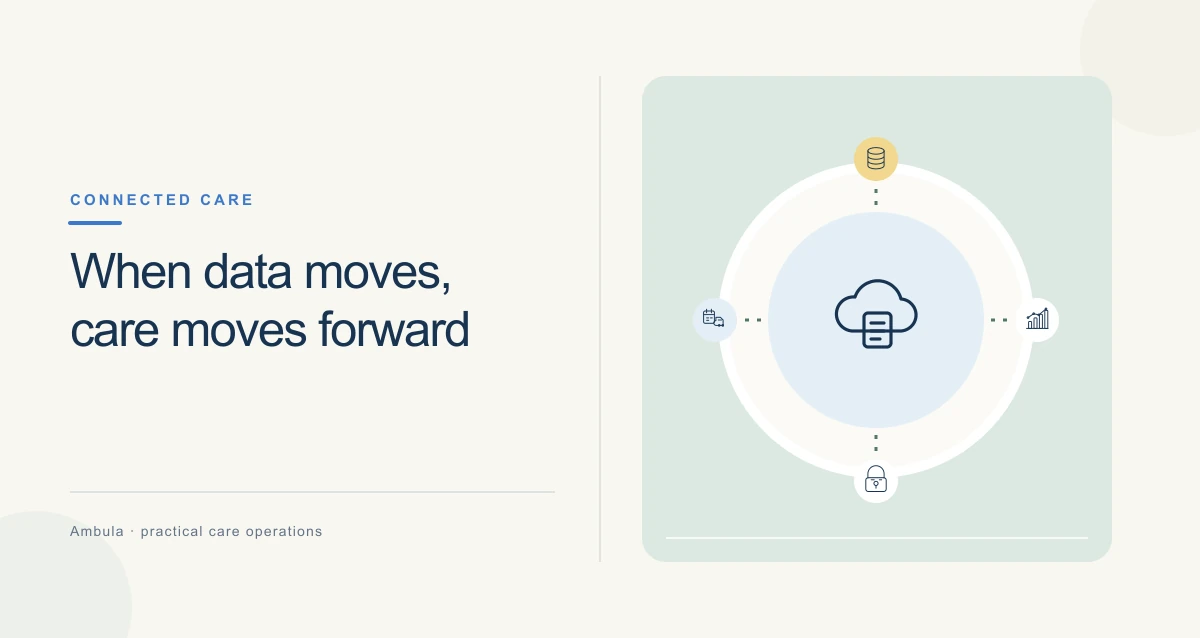
Technology can support healthcare delivery when it addresses a real care or operational need. An electronic record, telehealth service, patient portal, monitoring device, or analytics tool may help with a particular workflow, but none automatically improves care. Reliability depends on evidence, usability, access, integration, staff training, privacy, and clear responsibility for follow-up.
Common areas where technology is used
Clinical records: Document care and make authorized information available to the team.
Communication and exchange: Support referrals, transitions, patient access, and appropriate information sharing.
Remote services: Enable selected telehealth or remote-monitoring workflows when clinically appropriate.
Operations: Manage scheduling, billing, staffing, and task follow-up.
Decision support and analytics: Surface information for review, with human oversight and monitoring for error or bias.
Evaluate the actual problem and trade-offs
Before adoption, define the user, decision, and expected change. Ask what happens when the system is wrong or unavailable, whether it creates new work, who reviews alerts, and how results will be assessed. Include patients and staff who may face language, disability, connectivity, or device barriers.
Build privacy, security, and safety into selection
Identify the data involved, who can access it, where it flows, and what vendor responsibilities apply. Review the organization’s risk analysis, contracts, and incident procedures. Test the system with realistic scenarios and synthetic data before using it in production. Avoid assuming a “digital” or “AI-enabled” label means the tool is accurate or compliant.
Measure whether it helps
Choose a baseline and monitor a small set of outcomes relevant to the use case: task completion, access, rework, usability, safety events, or patient/staff feedback. Reassess after updates or workflow changes. Stop or adjust a tool when harm, burden, or poor performance outweighs its value.
An EMR such as Ambula is one component of a practice’s technology environment. Evaluate a specific workflow—like scheduling through charting and follow-up—rather than treating a product category as a solution to every delivery challenge.
Mousa leads product management and content at Ambula. He joined Ambula four years ago as its SEO specialist and now works on how the EMR handles the personal injury case, from intake to settlement. He writes about running a personal injury practice and healthcare digitalization.