Back to blog
Healthcare Marketing

Dental Office Marketing: A Practical, Patient-First Plan

Help local patients find and understand your dental practice with accurate service pages, useful oral-health education, accessible booking, and privacy-conscious outreach.

A

Ambula Team

7 min read ·

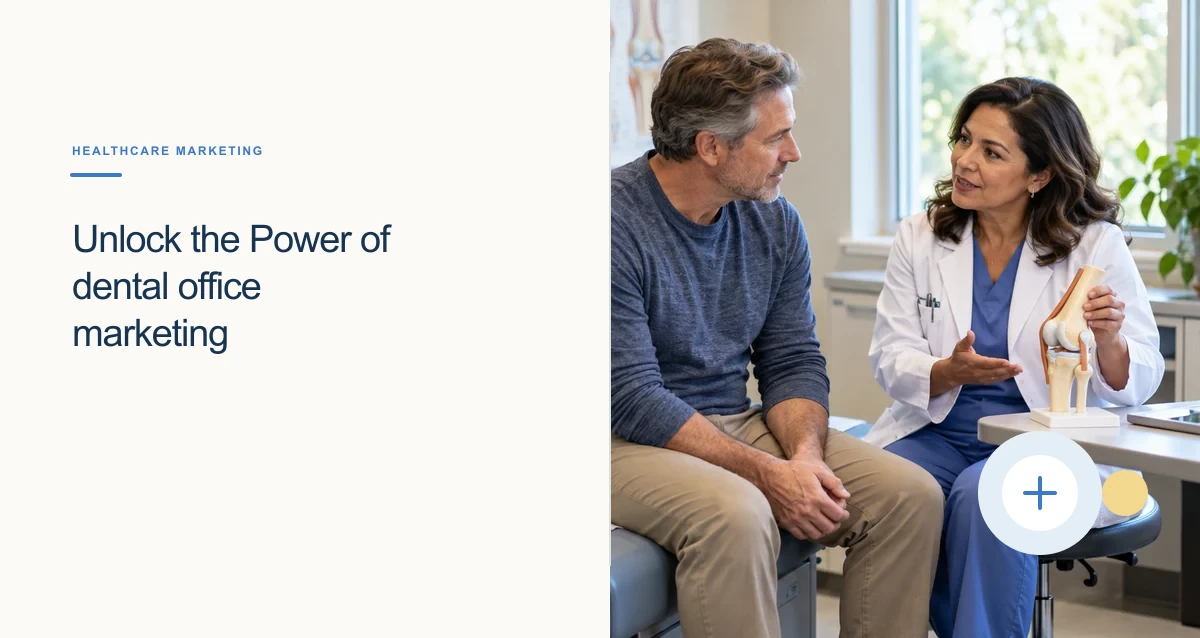
A Latina orthopedic physician explains a knee model to a middle-aged patient during a clinic visit.

Dental office marketing helps people in your service area learn what care you provide, how to contact the practice, and what to expect when they become a patient. A useful strategy is accurate, accessible, and patient-first. It supports discovery without making unsupported promises about pain, outcomes, or treatment needs.

Advertising and professional rules vary by jurisdiction. Before making claims about credentials, specialties, fees, outcomes, or before-and-after results, check your state dental board rules and applicable consumer-protection requirements.

Start with a clear practice position

Describe the patients and services your office is equipped to serve. Explain whether you offer general dentistry, a specific specialty, family care, emergency appointments, or particular treatment options, and use credential language that accurately reflects licensure and training. Avoid implying that a service is appropriate for everyone.

Build the basics patients need

Make your website useful

Include current hours, location and directions, contact information, services, clinician credentials, accepted payment or insurance information where appropriate, accessibility details, and a straightforward way to request an appointment. Explain what happens after a request and how urgent dental concerns should be handled. Keep contact forms limited to information needed to respond; do not invite sensitive clinical details through an unapproved form.

Maintain local listings

Keep your business name, address, phone number, hours, and website consistent across search profiles and directories you manage. Select accurate categories and update holiday hours or service changes. Avoid false locations, misleading service areas, or duplicate listings that confuse patients.

Make the first appointment easy to understand

Tell prospective patients how to book, what information to bring, whether new patients are accepted, and whom to call about costs or insurance. Clear expectations can reduce avoidable uncertainty. Offer accessible communication options and a way to ask for language or mobility accommodations.

Use education to build trust

Publish concise answers to common questions such as what happens at a routine visit, how to prepare for a procedure, or how to care for oral health between visits. Use credible sources and have a qualified dental professional review clinical content. Make clear when information is general education and when a person should contact a dentist for an individual assessment.

Social posts can point to helpful resources, introduce the team, or explain practice processes. Do not diagnose people in public comments or share patient photographs, treatment details, or recognizable stories without a valid permission process and review of privacy and professional rules.

Use reviews and testimonials responsibly

Invite honest feedback in a consistent, neutral way, without conditioning care or rewards on a positive review. Do not write reviews for patients, suppress negative feedback improperly, or make claims that an exceptional result is typical. When responding publicly, avoid confirming that a reviewer is a patient or discussing any treatment details. Move specific concerns to a private, approved channel.

Plan referrals and community outreach

Build relationships with local community groups, schools, employers, or healthcare professionals when the activity is useful and appropriate. Explain services accurately and keep referral arrangements consistent with applicable law, payer requirements, and professional ethics. Educational events can offer general information without turning clinical questions into public consultations.


Use paid media selectively

Start with one service area and a defined goal, such as helping people find a new-patient page or learn about a service. Keep ad claims consistent with the landing page and evidence. Avoid fear-based copy, guaranteed outcomes, misleading urgency, or targeting that exposes or presumes sensitive health information. Set a budget and end date so you can evaluate performance without allowing an unmonitored campaign to continue.

Measure what matters

Track a small group of measures: calls or booking requests by source, appointment requests completed, new-patient capacity, cost per qualified inquiry, and patient feedback about finding information. Use aggregate reporting when possible. Review analytics and advertising tools for privacy implications before sending appointment or health-related data to third parties.

Compare results with staff capacity and service fit. A high volume of inquiries is not necessarily a success if patients cannot get an appointment or the campaign creates mismatched expectations. Review the process and adjust one element at a time.

A simple 30-day plan

  1. Week 1: Review credentials, service descriptions, hours, local listings, and patient contact pathways for accuracy.
  2. Week 2: Improve one high-priority service page with clear eligibility, process, cost/coverage information where appropriate, and next steps.
  3. Week 3: Publish one professionally reviewed educational resource answering a common patient question.
  4. Week 4: Share the resource through one suitable channel, check inquiries and feedback, and choose one improvement for the next month.

Frequently asked questions

What is the first step in dental practice marketing?

Make essential information easy to find and accurate: services, credentials, location, hours, contact options, and how to request an appointment. Then choose one audience or service goal to build on.

Can a dental office promise painless treatment?

A blanket guarantee can mislead because experiences and clinical circumstances vary. Describe available comfort measures accurately and encourage patients to discuss their concerns with the dental team.

Can a practice respond to online reviews?

Yes, but responses should be professional and avoid confirming that someone is a patient or disclosing treatment information. Use a private channel for case-specific concerns and follow privacy policies.

For related guidance, see ethical healthcare marketing and marketing strategies for nutrition practices.

Conclusion

Strong dental marketing helps local patients make informed decisions. Keep practice information current, explain services and booking clearly, publish reviewed education, handle reviews with care, and measure whether outreach leads to appropriate appointments. A credible, sustainable plan protects patient trust while helping the right people find your office.

Sources

A

Written by

Ambula Team

Personal injury EMR and surgery center software

Ambula is the operating system for personal injury clinics and surgery centers. Our team writes about intake, charting, records, billing and liens, and how each fits into the case.

Built around the case, not the visit

Intake, charting, orders, records and lien billing for personal injury clinics, in one system.