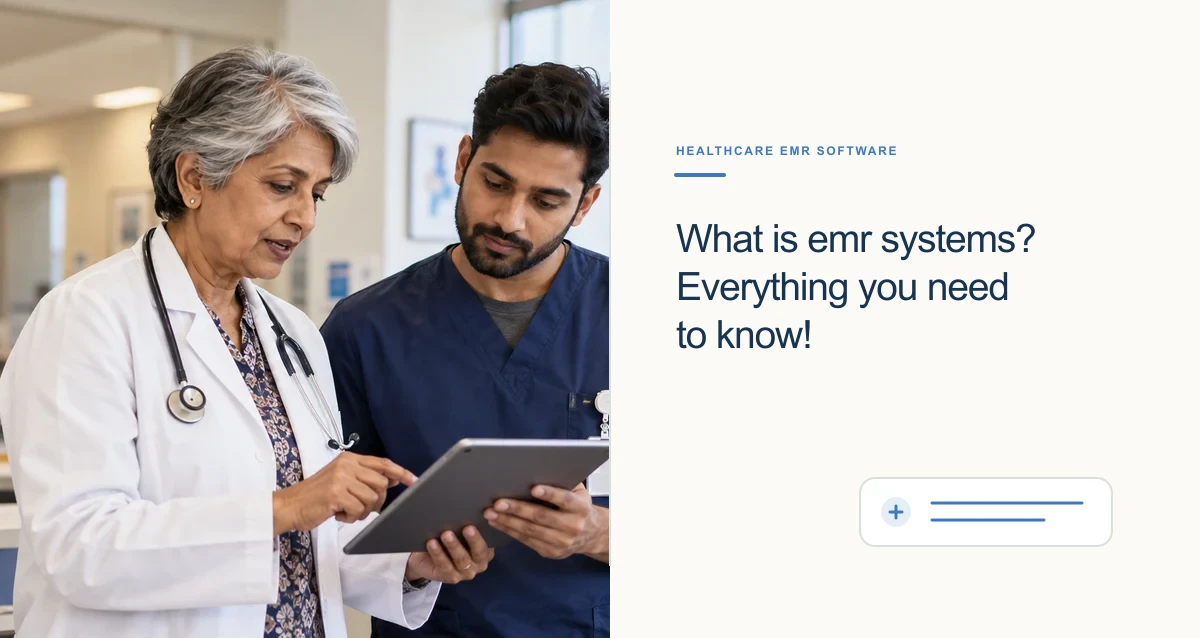
An electronic medical record (EMR) is a digital record used by clinicians and staff within a healthcare organization. It can replace or supplement paper charts for documenting visits and organizing information such as medications, diagnoses, and test results. Terminology is not always used consistently across vendors and settings.
EMR and EHR: how the terms are commonly used
HealthIT.gov describes an EMR as a digital version of a medical office’s paper chart, while an EHR is designed to support information sharing across authorized care organizations. In practice, product capabilities vary, and some vendors use “EMR” and “EHR” interchangeably. Evaluate the actual exchange functions, interfaces, access controls, and data portability rather than relying on the label alone. See HealthIT.gov’s terminology overview.
What an EMR system may include
Depending on the product and configuration, an EMR may support clinical documentation, scheduling, order management, billing workflows, reporting, or patient communication. Not every system includes all of these, and integrations may require separate configuration or fees. Ask vendors to demonstrate the work your team performs, including unusual cases, corrections, and handoffs.
How to evaluate a system
- List your specialty-specific workflows, required data, and must-have interfaces.
- Test usability with clinicians, front-desk staff, and billing users.
- Review security, permissions, backups, downtime planning, and audit capabilities.
- Clarify migration, training, implementation support, contract terms, and total cost.
- Confirm how data can be exchanged and exported if your needs change.
For an ASC-specific evaluation, Ambula describes perioperative charting across pre-op, intra-op, and post-op, along with digital consent and configurable reports. These are product-specific examples, not a claim that every EMR includes them or that they fit every center. Confirm modules, integrations, and implementation details with the vendor, then test the workflow with your own team.