Back to blog
Practice Management

EPCS and PDMP Checks: A Workflow Guide for Pain Management Practices

What DEA rules require for electronic prescribing of controlled substances, when Medicare and states require EPCS, how PDMP checks fit the workflow, and what the chart should show.

Mousa Kadaei

Mousa Kadaei

Product & Content Lead, Ambula · 5 min read ·

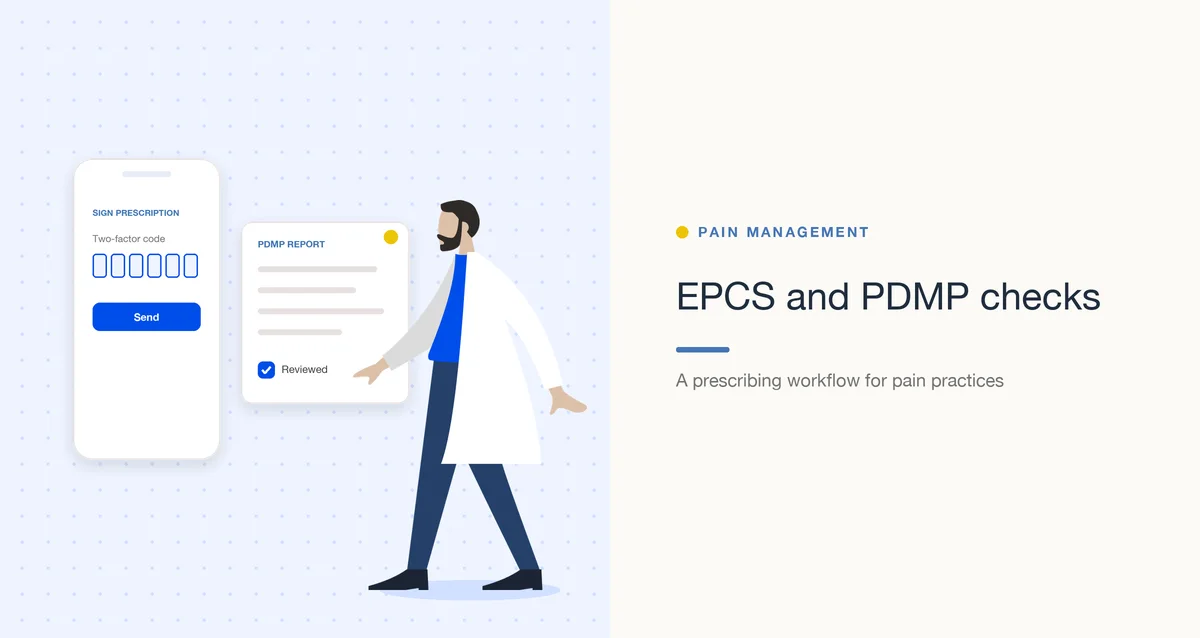
Illustration of a phone showing a two-factor signing code next to a PDMP report card marked as reviewed.

Pain management practices prescribe controlled substances more than most specialties, so two compliance tools sit at the center of their day: electronic prescribing of controlled substances (EPCS) and the prescription drug monitoring program (PDMP). This guide explains what each requires, how they fit into one prescribing workflow, and what the chart should show, including for patients with a personal injury case.

This is general information about compliance workflows, not legal or clinical advice. Requirements vary by state; check your state's current rules and your prescribers' DEA obligations.

What is EPCS?

EPCS is sending a prescription for a Schedule II to V controlled substance to the pharmacy electronically, through a prescribing application that meets DEA security rules. Those rules are in 21 CFR Part 1311, Subpart C. In short:

  • Identity proofing: before a prescriber can sign controlled substance prescriptions, their identity must be verified by a credential provider (21 CFR 1311.105).
  • Two-factor authentication: each signing uses two of three factors: something the prescriber knows (a password), something they have (a token or phone), or something they are (a fingerprint) (21 CFR 1311.115).
  • Logical access controls: the practice designates at least two people to manage who can sign controlled substance prescriptions, and at least one of them must be a DEA registrant who is authorized to prescribe controlled substances and holds a two-factor credential (21 CFR 1311.125). Access must be revoked if a credential is lost or compromised.

Is EPCS required?

Often, yes. There are two layers:

  • Medicare Part D: under the CMS EPCS Program, prescribers must send at least 70% of their Schedule II to V controlled substance prescriptions for Part D drugs electronically each measurement year. Prescribers who issue 100 or fewer qualifying Part D controlled substance prescriptions a year receive an automatic exception, and CMS grants other exceptions for declared disasters and approved waivers. Compliance is measured for each prescriber, not for the practice.
  • State law: many states have their own e-prescribing mandates for controlled substances, sometimes for all payers, with their own exceptions. Check your state board's current rules.

What is a PDMP check?

A PDMP is a state database of controlled substance prescriptions dispensed to each patient. Checking it shows a prescriber what else the patient has been prescribed, by whom and when, before writing a new prescription.

Many states require prescribers to check the PDMP in set situations, for example before the first opioid prescription for a patient and periodically during ongoing treatment. The triggers, drugs covered and exceptions differ by state. The PDMP Training and Technical Assistance Center keeps a state-by-state list of mandatory query conditions, and the CDC's PDMP overview explains how the programs work. Some states let a delegate, such as a nurse or medical assistant, run the query on the prescriber's behalf.

How do EPCS and PDMP fit into one workflow?

  1. Review the medication history in the chart: current regimen, recent changes and the response.
  2. Check the PDMP when your state requires it, or by practice policy, and review the report.
  3. Record the check: date and time, who ran it, and that it was reviewed.
  4. Make and document the prescribing decision, including the reason for any change.
  5. Sign electronically with two-factor authentication and send to the pharmacy.
  6. Follow up: note the plan and when the regimen will be reviewed again.

When the PDMP check, the prescription and the medication history live in one system, the prescriber doesn't have to switch between the state portal, a separate e-prescribing tool and the chart. Many states also allow PDMP access to be integrated into the EHR.

What should the chart show?

  • The PDMP check: date, time, who ran it and that it was reviewed.
  • The prescription: drug, strength, quantity, directions and refills.
  • The reason for starting, changing or stopping a medication.
  • Any controlled substance agreement and when it was signed or updated.
  • Pain and function scores over time, alongside the medication history.
  • The follow-up plan and the next review date.

Why does this matter in a personal injury case?

When a patient has an injury claim, the medication record is read by the patient's attorney and the insurer. Defense lawyers often look closely at controlled substance prescriptions, and a gap or an unexplained change can be used to question the treatment. A clear record helps the case and protects the practice:

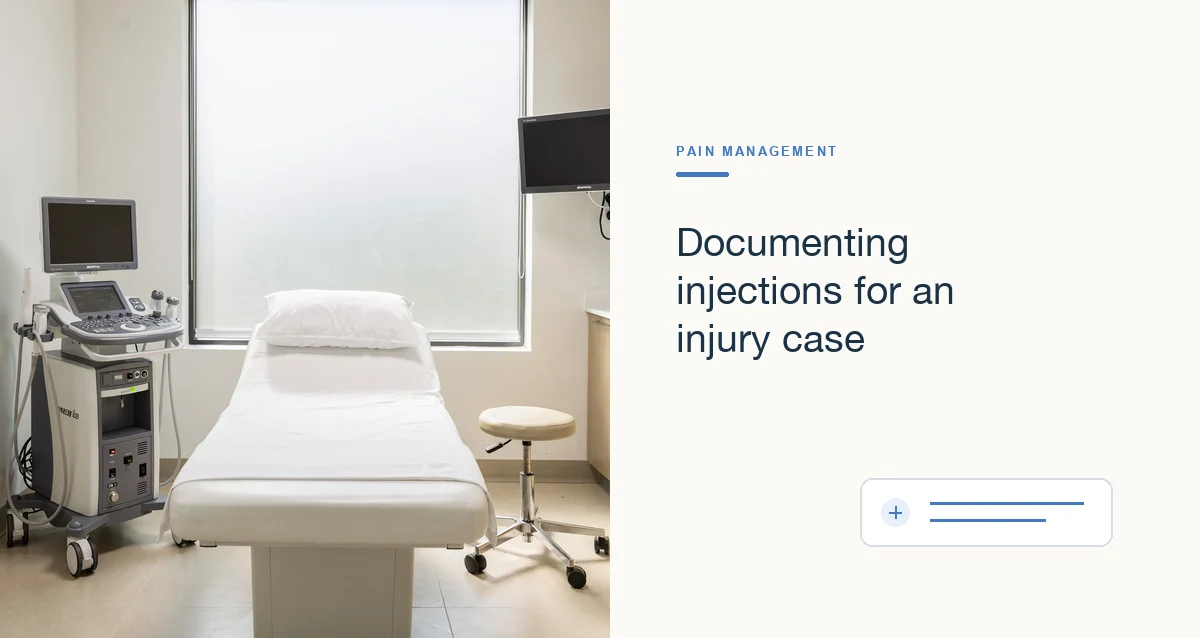
  • Medication history and changes that line up with documented pain, function and procedures. See how to document injections for an injury case.
  • PDMP checks recorded at each required point.
  • Records sent to the attorney that include the medication history, not just visit notes.

Common mistakes

  • Checking the PDMP without recording it. If it isn't documented, it's hard to prove it happened.
  • Shared logins or tokens. Two-factor credentials belong to one prescriber and must never be shared.
  • No backup access manager. The DEA requires at least two people to manage EPCS access; staff turnover can leave one.
  • Missing a state change. PDMP and e-prescribing rules change; assign someone to check the state board each year.
  • Prescribing outside the chart. Prescriptions sent from a separate tool can leave the chart's medication history incomplete.

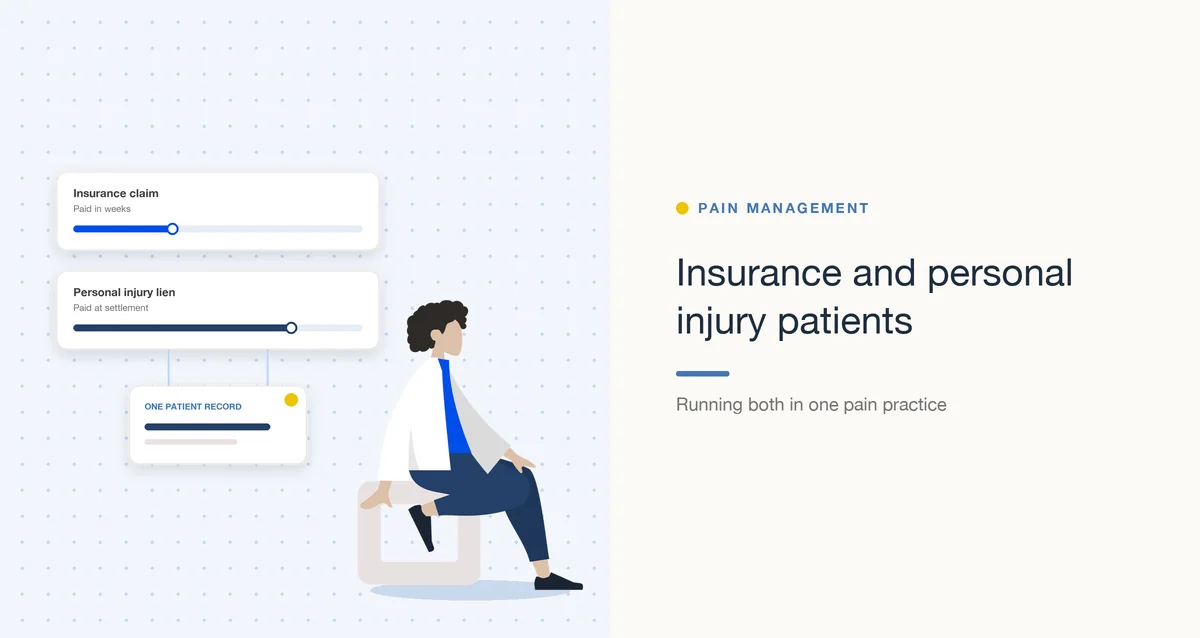
Ambula's pain management EMR does not include e-prescribing of controlled substances (EPCS) or PDMP checks. Practices that use Ambula prescribe controlled substances in a separate EPCS tool and keep injection and procedure notes, pain scores, billing and personal injury cases in Ambula. For practices that also treat insured patients, see running insurance and personal injury patients in one pain practice.

Frequently asked questions

Does every prescription need a PDMP check?

It depends on the state and the drug. Some states require a check before every new controlled substance prescription, others before the first prescription and then at set intervals. Check your state's current mandate.

Can staff run the PDMP check for the prescriber?

Many states allow a registered delegate to query the PDMP on a prescriber's behalf, but the prescriber stays responsible for reviewing the report. Check your state's delegate rules.

What does the CMS 70% EPCS requirement apply to?

It applies to Schedule II to V controlled substance prescriptions for Medicare Part D drugs, measured for each prescriber over a measurement year, with exceptions for low-volume prescribers, declared disasters and approved waivers.

What happens if an EPCS token is lost?

The practice's access managers must revoke the prescriber's signing access until a new credential is issued. Have a written process and keep a record of each change.

Do PDMP checks matter for personal injury patients?

PDMP checks matter for personal injury patients. The medication record is often reviewed by the attorney and insurer, and documented PDMP checks show that prescribing followed the required steps.

Mousa Kadaei

Written by

Mousa Kadaei

Product & Content Lead, Ambula

Mousa leads product management and content at Ambula. He joined Ambula four years ago as its SEO specialist and now works on how the EMR handles the personal injury case, from intake to settlement. He writes about running a personal injury practice and healthcare digitalization.

Built around the case, not the visit

Intake, charting, orders, records and lien billing for personal injury clinics, in one system.