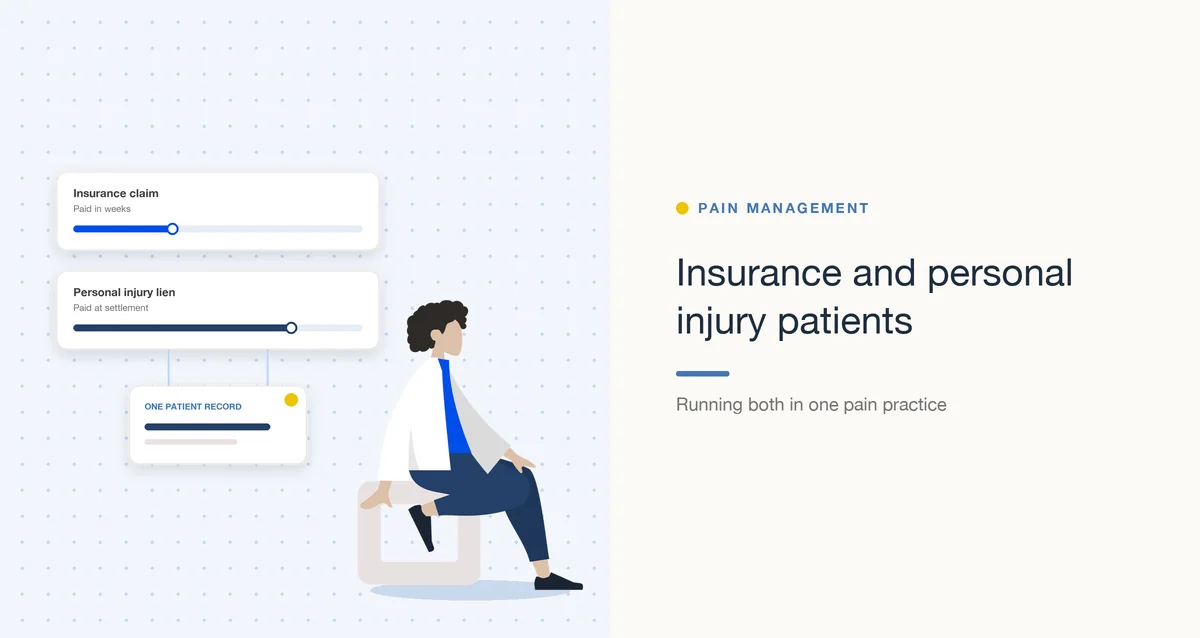
Most pain management practices don't treat only personal injury patients or only insurance patients. They treat both, often in the same week, sometimes the same patient. That mix is good for a practice's stability, but it creates two billing worlds: insurance claims that get paid in weeks, and personal injury balances that wait months or years for a settlement. This guide covers how to run both in one practice without losing track of either.
Why do pain practices treat both kinds of patients?
Back and neck injuries from car accidents are a common reason patients are referred to pain management, and many of those patients have an attorney. At the same time, the practice's steady volume usually comes from insured patients with chronic pain. Running both lets a practice smooth out cash flow: insurance revenue pays the bills each month, while personal injury cases often pay at full billed charges, but later.
The challenge is that the two groups move through the practice differently, from the first phone call to the final payment.
How are insurance and personal injury patients different?
| Insurance patient | Personal injury patient | |
|---|---|---|
| Who pays | The health plan, plus the patient's copay or deductible | Usually paid from the settlement under a medical lien or letter of protection; sometimes auto coverage such as MedPay or PIP first |
| When you get paid | Weeks after the claim | When the case settles, often months or years later |
| Rates | The plan's contracted rate | Usually the practice's billed charges, often reduced at settlement |
| Before treatment | Eligibility check and, for many procedures, prior authorization | Signed lien or letter of protection, attorney details, accident information |
| Who reads the chart | The payer, if it audits | The patient's attorney, the insurer and possibly a court |
| Main risk | Denials and missed authorizations | Unsigned liens, lost track of the attorney, large reductions or no recovery |
How should intake sort the two?
The most important question comes before the first visit: is this visit related to an accident or injury claim? The answer decides which workflow the patient follows.
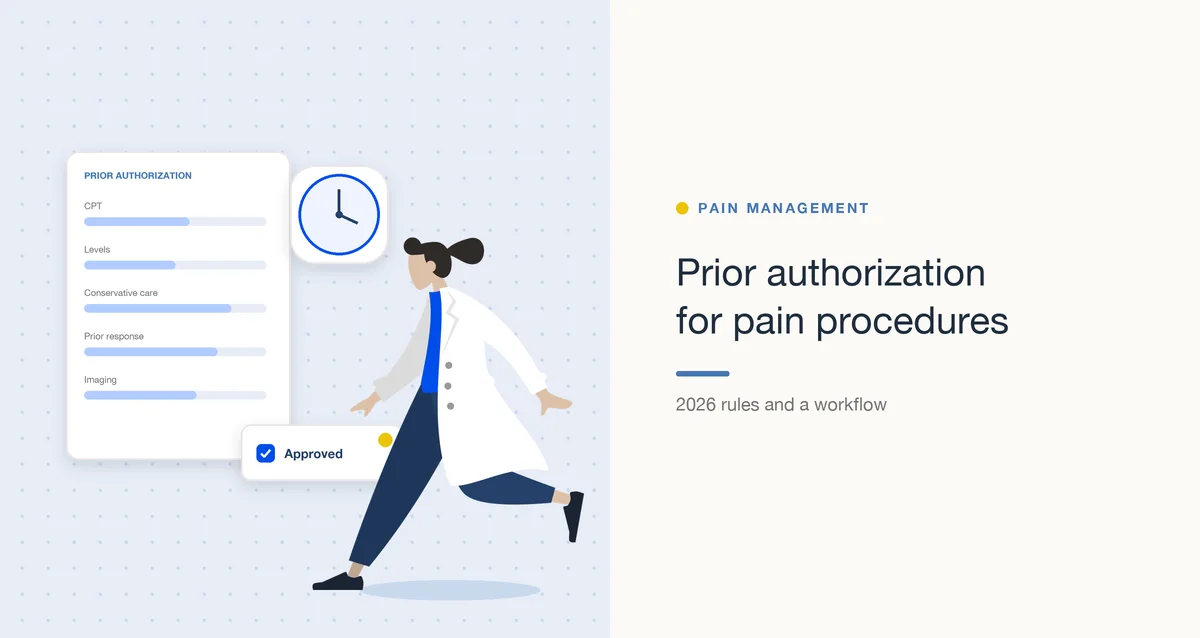
- Insurance path: verify eligibility, note copays and deductibles, and check whether planned procedures need prior authorization. See prior authorization for pain management procedures.
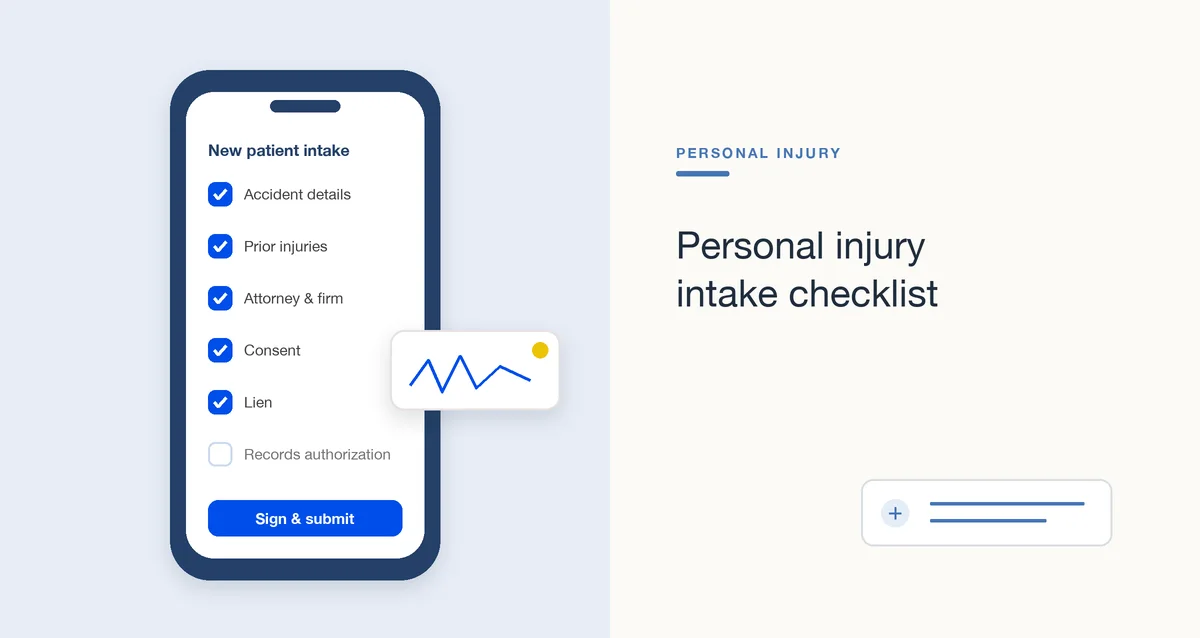
- Personal injury path: collect the accident date and type, the attorney and firm, any auto coverage, and the signed lien or letter of protection before the first procedure. The personal injury intake checklist lists everything to collect.
- Both: some accident patients also have health insurance. Decide case by case, with the patient and the attorney, whether to bill the health plan or treat on a lien, and record the decision.
Watch for plan and program rules
Billing a personal injury patient on a lien isn't always a free choice. If your practice is in network with the patient's health plan, the contract may limit billing the patient or a third party instead of the plan, and some states have their own rules; Arizona, for example, restricts liens by in-network providers (see the Arizona lien guide). Medicare and Medicaid patients have separate rules on billing liability insurance. Check your contracts and get billing or legal advice before setting a policy.
How do you keep two fee schedules straight?
Use one set of standard charges for every service, and let each payer's contract decide what's actually paid. For insurance, the plan pays its contracted rate. For a personal injury case, the bill usually shows your standard charges, which may be reduced at settlement.
Consistency matters. Defense lawyers and insurers compare what a practice charges personal injury patients with what it accepts from insurers, and some states now limit what can be recovered. California's SB 623, for example, caps lien-based charges in rideshare accident cases from 2027 (what SB 623 changes). Charges that look inflated only for injury cases invite reductions and challenges.
How do you track money that arrives on two timelines?
Insurance accounts receivable and personal injury balances need different reports:
- Insurance A/R: aging by payer (30, 60, 90 days), denials and their reasons, and claims waiting on authorization.
- Personal injury balances: open balance per case, attorney and firm, case status (treating, demand sent, negotiating, settled) and how long the case has been open.
Mixing them in one aging report makes a healthy insurance A/R look broken, because personal injury balances age for months by design. Separate them, and review personal injury cases by status instead of age.