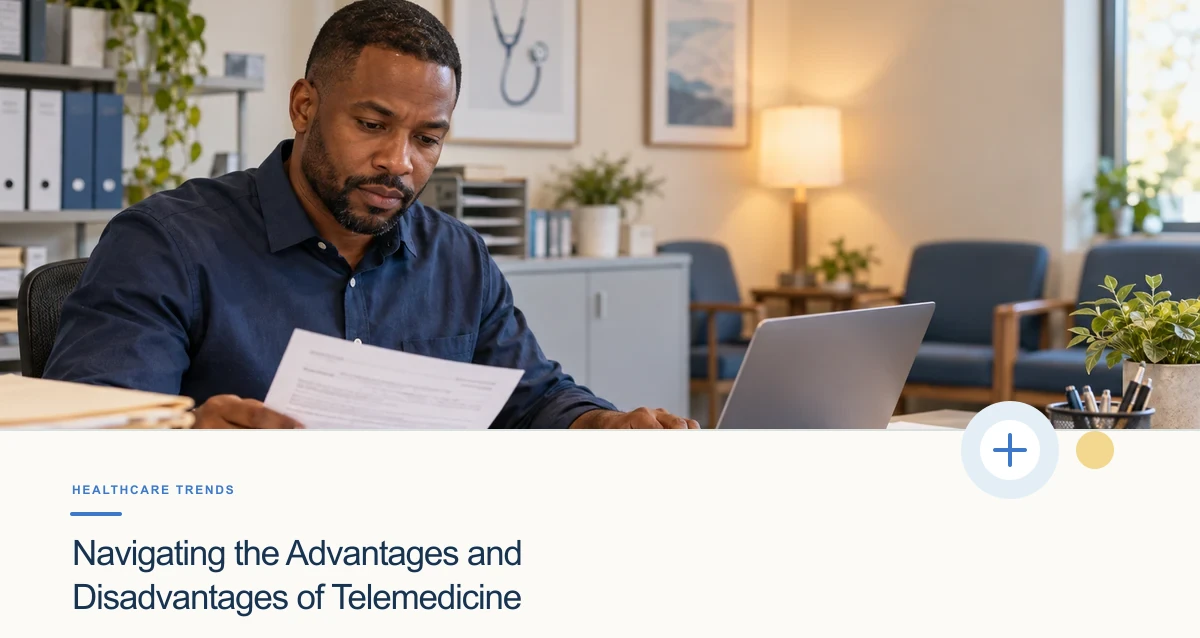
Telemedicine can make some healthcare interactions more convenient, but it is not appropriate for every patient, condition, or visit. Its value depends on the clinical question, patient preference, technology access, privacy, provider availability, and applicable coverage and licensing rules. A remote visit should be used when it is clinically appropriate—not simply because it is available.
Potential advantages
Patients may avoid some travel and attend from a location that works for them.
Remote follow-up can be useful for selected conversations, results, or ongoing care when an in-person examination is not needed.
Teams may coordinate certain services across distance, subject to the care model and available technology.
Important limitations
A remote format may not support the examination, testing, or procedure needed to make a clinical decision.
Connectivity, device access, privacy at home, disability, language, or digital literacy can create barriers.
Some patients may prefer in-person care or have concerns about sharing information remotely.
Coverage, billing, and eligible services vary by payer and can change over time.
Licensure and professional requirements may depend on where the patient is located during the visit.
Plan telemedicine as a clinical workflow
Decide which visit types may be appropriate, how clinicians will determine when an in-person assessment is needed, what happens if the connection fails, and how urgent concerns are escalated. Confirm patient identity and location, obtain any required consent, and use an approved platform and private setting. HHS provides guidance on cross-state licensure; check the relevant state board and payer rules for the specific service.
Verify current Medicare coverage
Medicare telehealth coverage is subject to service-specific and time-sensitive rules. Check the CMS telehealth page and its current-year service list before scheduling or billing a service. Do not rely on pandemic-era summaries or an old article for present-day eligibility.
Choose technology with patients and clinicians in mind
Evaluate audio/video quality, accessibility, patient support, integration with the record, privacy safeguards, and the fallback workflow. If Ambula is part of the practice’s broader operations, confirm what telehealth-related functions—if any—are available in the specific configuration rather than assuming the EMR includes a virtual-visit platform.
A balanced program offers telemedicine when it fits the clinical need and preserves a clear path to in-person care when it does not.
Mousa leads product management and content at Ambula. He joined Ambula four years ago as its SEO specialist and now works on how the EMR handles the personal injury case, from intake to settlement. He writes about running a personal injury practice and healthcare digitalization.