
The Ambula Blog
All articles, page 13 of 14.
332 articles on healthcare technology, EMR software, patient engagement, and running a modern practice.
332 articles · page 13 of 14
Why Healthcare Practices Use EHR Software—and How to Improve Fit
Learn where EHR software may support documentation and coordination, how to improve usability, and what to evaluate before adopting a system.
2 min read

EMR vs. Paper Records: Benefits, Trade-Offs, and Safety
Compare electronic medical records with paper charts across access, search, sharing, workflow, privacy, downtime, and cost—and learn what practices should evaluate before switching.
7 min read

Why Healthcare Interoperability Matters: Benefits and Barriers
Learn how health data exchange can support care transitions, patient access, and follow-up—and why standards, matching, data quality, and workflow still matter.
6 min read

Why Accurate Records Matter in Practice Management Software
Accurate practice records support reliable scheduling, communication, billing, and reporting. Learn what to verify and how to build a practical review process.
8 min read

Postoperative Pain Management: Communication and Recovery
Understand why individualized pain planning and clear follow-up matter after surgery, with patient-safety guidance from MedlinePlus.
2 min read

Why Is Patient Engagement Important in Healthcare?
Patient engagement is a partnership, not a demand that people manage care alone. Learn how shared decisions, clear communication, accessible choices, and patient feedback can support better care experiences.
7 min read

Why Is Patient-Centered Care Important? Benefits & Practice
Patient-centered care respects each person’s needs, values, and preferences. Learn why it matters and how teams can make it part of everyday care.
7 min read

Why is personal injury a growing business for ASC?
A practical guide to handling personal injury cases at an ASC, from clinical decisions and documentation to records requests and payment terms.
5 min read

What Is a Letter of Protection? A Guide for Medical Practices
A letter of protection lets a practice treat a personal injury patient now and get paid from the settlement. Here is what the practice receives, what to track from intake to settlement, and where the LOP belongs in the record.
10 min read
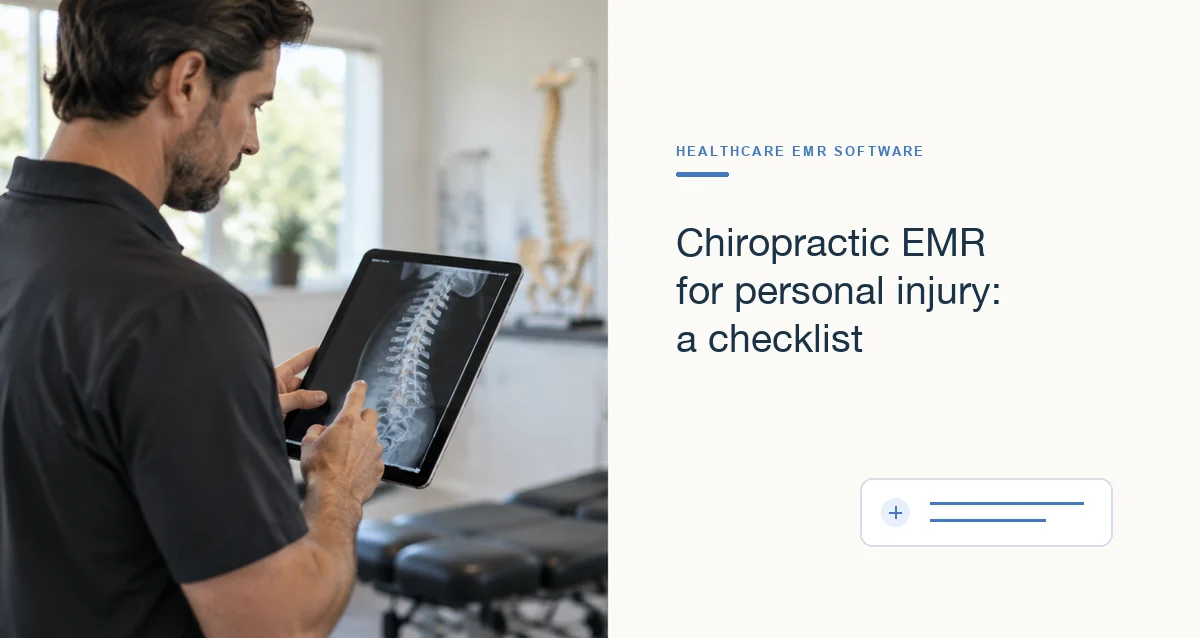
Chiropractic EMR for Personal Injury: A Checklist for Clinics
What a chiropractic EMR needs when your clinic treats personal injury patients: exam and progress notes, lien forms at intake, lien tracking, an attorney portal and the questions to ask in a demo.
8 min read

How to Document Epidurals, Nerve Blocks and Joint Injections for an Injury Case
What an injection record should contain when the patient has a personal injury case: the indication, site and dosage, response over time, and a summary the attorney can use.
7 min read

From Conservative Care to Surgery: Documenting an Orthopedic Injury Case
How to document an orthopedic injury case from the first exam through conservative care, the surgical decision and recovery, so the record explains itself to the attorney.
7 min read

Ambulatory Surgery Center Staffing Requirements: Medicare, State and Accreditor Rules
What Medicare's 42 CFR Part 416 requires for ASC staffing, anesthesia, credentialing and discharge, plus how states and accreditors add rules.
8 min read

Arizona Ambulatory Surgery Center Regulations: A Practical Guide
Who oversees surgery centers in Arizona, what the state regulates in general, how Medicare and accreditation layer on, and what to confirm with ADHS.
5 min read

California Ambulatory Surgery Center Regulations: Licensing, Accreditation and Medicare
How CDPH, the Medical Board of California and Medicare share oversight of surgery centers, and the questions to confirm before choosing a pathway.
5 min read

Navigating New York's Ambulatory Surgical Care Requirements
A plain-language guide to New York surgery center oversight: Department of Health review, office-based surgery, Medicare and accreditation.
5 min read

Office-Based Surgery vs Ambulatory Surgical Center: How to Choose
Compare office-based surgery and ASCs: Medicare rules, facility fees, state licensing, accreditation, anesthesia limits and how to pick a model.
8 min read

Understanding Georgia Ambulatory Surgery Center Regulations
A plain-language guide to who oversees Georgia surgery centers, what DCH reviews, how Medicare and accreditation fit, and what to confirm.
5 min read

Understanding New Jersey Ambulatory Surgery Center Regulations
How New Jersey Department of Health licensing, office-based surgery rules, Medicare and accreditation fit together, and what to confirm with the state.
5 min read

Structured vs. Unstructured Data in an EHR: Where Each Belongs
Structured and unstructured EHR data compared: examples of each, where each belongs in the chart, and why structured pain scores matter in personal injury case reports.
7 min read

What Are the Functional Components of an EHR? The Frameworks Explained
There is no single official list of five. Here is what the IOM's eight core functions, ONC's Base EHR definition and HL7's functional model say an EHR should do, and how to use them.
7 min read

Types of EMR Systems: How to Choose One for a Specialty Practice
EMR types come down to three choices: care setting, hosting model and specialty fit. A decision guide for specialty and personal injury practices choosing an EMR.
6 min read

Why Is Patient Identification Important?
Why correct patient identification protects safety, privacy and the record: where misidentification happens, what The Joint Commission's two-identifier goal requires, and habits that help.
7 min read

5 Challenges With EHR Interoperability and How Practices Can Respond
Five reasons EHR data exchange is still hard (standards, patient matching, information blocking policy, cost and data quality) and what a practice can do about each.
8 min read