
The Ambula Blog
All articles, page 5 of 14.
332 articles on healthcare technology, EMR software, patient engagement, and running a modern practice.
332 articles · page 5 of 14

How Practice Management Improves Resource Use and Productivity
Improve practice resource use with workflow mapping, realistic scheduling, clear task ownership, and balanced measures for access, quality, and staff workload.
5 min read

How Practice Management Software Supports the Revenue Cycle
See where practice management software can support scheduling, claims, denials, and payment workflows—and how to evaluate results without assuming automation guarantees revenue gains.
6 min read

How Practice Management Systems Support Care-Team Coordination
See where practice-management tools can clarify administrative handoffs—and why clinical communication needs the right channel, ownership, and safeguards.
4 min read

How to Involve Patients in Healthcare Decision-Making
Use shared decision-making to invite patient participation, compare options, understand what matters to the patient, and agree on follow-up together.
7 min read

How to Integrate Technology Into Practice Management
A practical guide to choosing and introducing practice-management technology around real workflows, with safeguards for privacy, downtime, and staff adoption.
3 min read
How ASC Billing Services Work: From Scheduling to Reconciliation
Follow an ambulatory surgery center’s billing workflow from eligibility and authorization through coding, claims, denials, and payment reconciliation—with practical ways to assess an in-house or outsourced team.
8 min read

How EHRs Can Support Population Health Management
EHRs can support registries, outreach, quality measurement, and public health reporting—but useful population insights depend on data quality, interoperability, and follow-through.
7 min read
How First Impressions Affect Patient Interactions in Healthcare
Learn how access, communication, check-in, privacy, and follow-up shape first impressions—and practical ways clinics can make the experience clearer and more respectful.
4 min read

How to Secure a Medical Practice Scheduling System
Use a risk-based approach to scheduling-system security, covering access, vendors, data flows, staff practices, incident response, and downtime planning.
4 min read
How to Manage Appointment Scheduling in a Medical Practice
Build a practical medical-practice scheduling workflow for booking, reminders, cancellations, access measures, and software selection.
4 min read

How Patients May Experience Electronic Medical Records
Patients’ experiences with electronic records depend on access, communication, privacy, and how technology is used during care. Explore common benefits, concerns, and ways practices can listen and improve.
6 min read
How to Correct an EMR Error: Safe, Policy-Based Steps
Learn how to respond to common EMR errors, preserve the audit trail, escalate safety issues, and follow your organization’s correction policy.
10 min read

How Does an EMR Affect Patient Care and Documentation?
An EMR changes how clinicians create, find, and share encounter information. Learn where structured notes can help, where they can add friction, and how to protect clarity and follow-up.
7 min read
How an EMR Can Support Better Patient Care
See how an EMR can support clinical decisions, medication review, test-result follow-up, care coordination, and patient participation—and what teams must get right.
7 min read
How EHR Systems Affect Productivity: Benefits and Risks
See how EHR workflows may support productivity, what can add documentation burden, and how clinics can measure time, quality, usability, and patient interaction.
5 min read

How EMRs Affect Healthcare: Care Delivery, Workflows, and Trade-Offs
Explore how EMRs shape patient access, clinical workflows, operations, and care coordination—and why usability, data quality, and implementation affect results.
6 min read

How Does Patient Centered Care Improve Outcomes
Patient-centered care respects each person’s preferences, needs, and values. Learn how shared decisions, communication, and coordination can improve care processes—and how to measure results without assuming guaranteed savings or outcomes.
8 min read
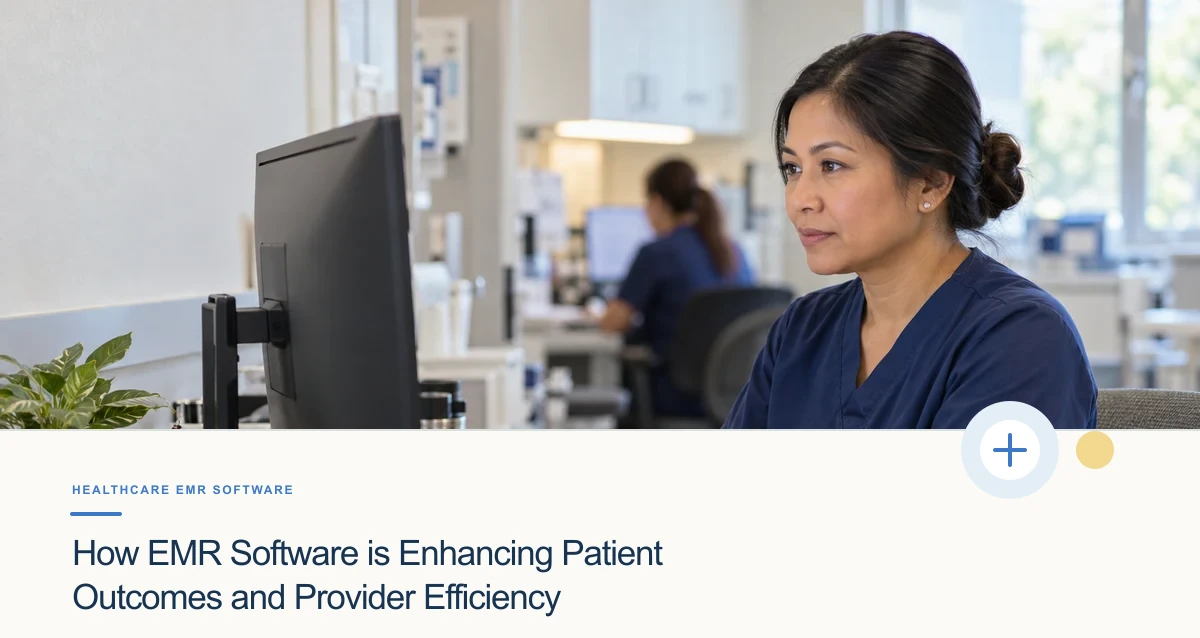
How EMR Software Can Support Care and Provider Workflows
See where EMR software may support documentation and coordination, what shapes efficiency, and how to assess outcomes without guarantees.
4 min read
EMR Voice Recognition: Uses, Benefits, Risks, and How to Choose
See how speech recognition can support EMR documentation, where it can fall short, and what clinics should test for accuracy, workflow fit, privacy, and integration.
8 min read

Meaningful Use and Today’s EHR Programs: What Changed
Understand how Meaningful Use evolved into today’s CMS Promoting Interoperability programs, and how clinicians and facilities can check current requirements.
4 min read

How Electronic Medical Records Have Changed Healthcare
Electronic records changed how clinics document, retrieve, and share health information. Explore the major shifts, the limitations that remain, and what determines whether an EMR helps in practice.
7 min read
Healthcare SEO and Patient Trust: A Practical Guide
Build healthcare SEO around accurate service information, transparent expertise, accessible next steps, and privacy-conscious measurement—not ranking promises.
4 min read

Hospital SEO: Improve Service Discovery and Patient Access
Help patients find accurate hospital service and location information with responsible SEO, clear access paths, and useful performance measures.
4 min read

Why Patient Engagement Matters in Healthcare
Learn what meaningful patient engagement looks like, how practices can support it, and which measures respect patient needs and choice.
4 min read